
Rule of Thumb
If your garage door is hard to lift or won't move at all on a cold morning, ice or stiff lubricant is almost always the first suspect, not a broken part. The main exceptions: a door that was already struggling before the cold snap, a door that opens fine but reverses or stops partway (that's more likely a sensor or safety issue than a cold-weather one), or a door that strains and makes a loud bang when it finally breaks free, which can point to a spring that's about to fail rather than just a sluggish one.
Symptoms to Watch For
- Door won't lift at all, or the opener strains and clicks off without moving it
- Opener runs the full cycle but the door barely moves, or moves then stalls
- Door is noticeably slower than usual, especially the first trip of the day
- Grinding, squealing, or scraping sound along the tracks
- Door jerks or shudders instead of moving smoothly
- A loud bang or snap when the door finally releases
None of these are normal, even in winter. A working garage door shouldn't need force, even on the coldest days.
Causes, In the Order a Technician Checks Them
1. Ice at the Bottom Seal
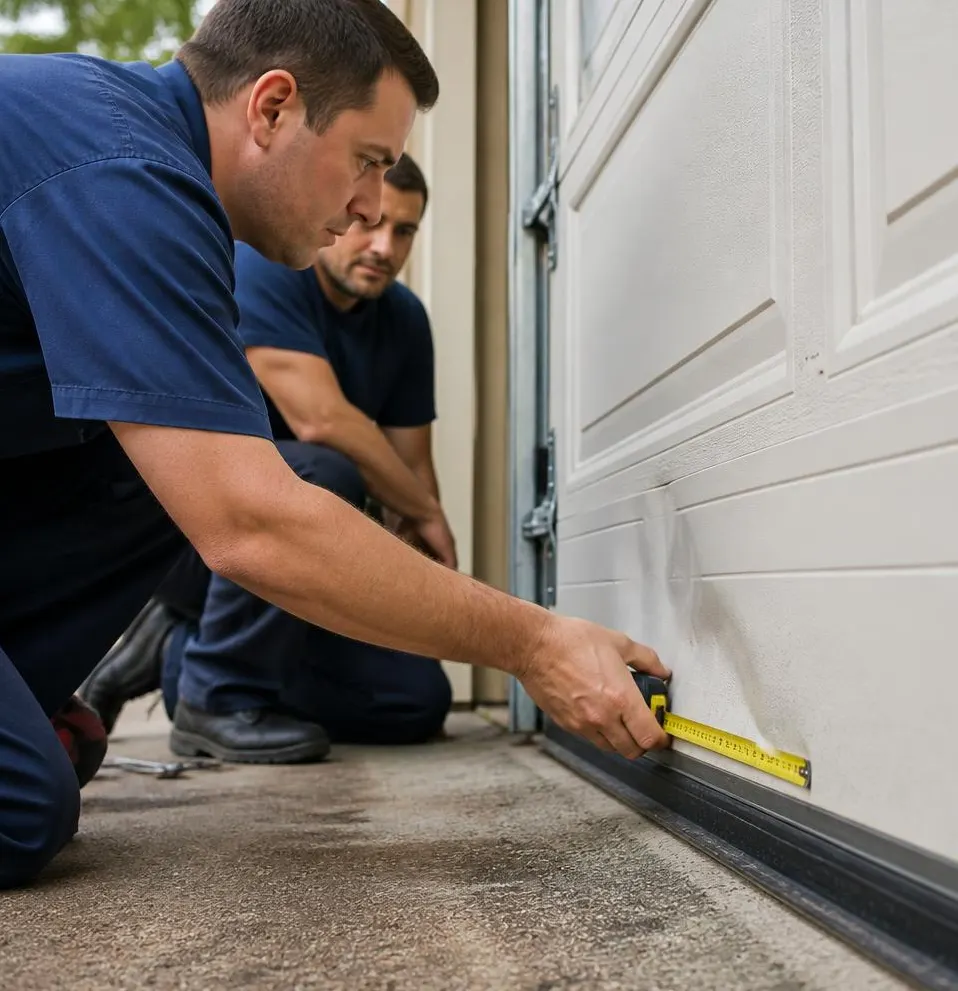
This is the first and most common issue after a freeze-thaw cycle or a nor'easter. Melted snow or condensation runs under the door, then refreezes overnight and bonds the rubber seal to the concrete apron. The fix is simple but needs patience: pour warm (not boiling) water along the seal line, or carefully use a hair dryer to loosen the ice. Never force the opener against frozen seal, since that strains the opener motor, the drive gear, and the bottom panel all at once. Once it's free, a fresh bead of garage door seal or a bag of ice melt kept nearby for next time saves the repeat.
2. Gritty or Frozen Tracks
Old grease thickens in the cold, and tracks collect road salt and grit that gets tracked in on tires and boots. That combination turns the rollers' path into sandpaper. A technician wipes down the tracks and rollers, then applies a silicone-based or lithium garage door lubricant rated for cold temperatures, never WD-40, which actually attracts dust and dries out fast.
3. Springs Losing Lift in Extreme Cold
Metal contracts in the cold, and torsion springs that are already weak or near the end of their lifespan can lose enough tension to make the door feel noticeably heavier. If the door strains, bangs, or the opener seems to be doing all the lifting with none of the usual spring assist, that's a sign the spring is marginal, not just cold. Spring replacement isn't a DIY job: the springs are under heavy tension and require the right tools and training to swap safely.
4. Opener Limits and Force Settings
Openers are set to expect a certain amount of resistance. A door that's moving slower because of cold grease or stiff rollers can trip the opener's force setting, making it stop or reverse before fully closing. A technician checks and recalibrates the limit and force settings rather than just cranking the force up, which can mask a mechanical problem instead of fixing it.
5. Frost on Safety Sensors
The photo-eye sensors near the bottom of the tracks can fog or frost over on humid winter mornings, especially after a snowstorm. This can make the door refuse to close even though nothing is mechanically wrong. Wiping the lenses and checking that both sensors are aligned usually resolves it in minutes.
6. Rusted or Stiff Hinges and Rollers
This is especially common on the area's older housing stock, where original steel rollers and hinges have been through years of freeze-thaw cycles and road salt exposure. Rust builds up in the hinge pins and roller bearings, making the door stiff even once the ice is gone. The fix is usually replacing steel rollers with sealed nylon ones, which hold up far better to cold and moisture, plus lubricating every hinge point.
When to Call Stewartstown Garage Door
If you've cleared the ice and the door is still sluggish, straining, or banging when it moves, stop using the opener and call. That's usually a spring or roller issue, not a cold-weather fluke. We offer Spring Replacement for doors that are clearly underpowered for their weight, and Preventive Maintenance visits before winter really sets in, which cover lubrication, track cleaning, roller inspection, and sensor checks, so the first hard freeze doesn't catch your door off guard.
If your garage door is fighting you every cold morning, give Stewartstown Garage Door a call. We serve Stewartstown, Shrewsbury, New Freedom, Glen Rock, Fawn Grove, Railroad, Winterstown, and New Park, and we'll get it moving smoothly again before the next freeze.